A mission to map more than 100 human brains at cellular resolution has been launched at the Sudha Gopalakrishnan Brain Centre of the Indian Institute of Technology Madras (IIT Madras), which Prime Minister Narendra Modi dedicated to the nation on 11 October.
A release from the Prime Minister’s Office on 10 October said the mission would produce three-dimensional atlases of more than 100 human brains covering the full lifespan, from the foetal stage to old age, and described it as a global scientific mission. The Prime Minister was also due to release C-STROKE, which the release describes as a human ischaemic stroke atlas featuring over 1,000 annotated microscopic sections from a stroke-affected brain, intended to help researchers identify new therapeutic targets. DT Next reported on 11 October that the dedication, the mission launch and the release of C-STROKE took place during the Prime Minister’s visit to the campus that day.
What mapping 100 human brains involves
The centre set out the target well before the October launch. In a press release of 12 June 2026, IIT Madras described the centre’s mission as imaging over 100 whole brains across the human lifespan and across neurological diseases, with the aim of building the most comprehensive set of cell-resolution human brain maps anywhere. Mapping 100 human brains at that level of detail means digitising hundreds of thin tissue sections per brain and reconstructing them into three-dimensional atlases that researchers can navigate region by region.
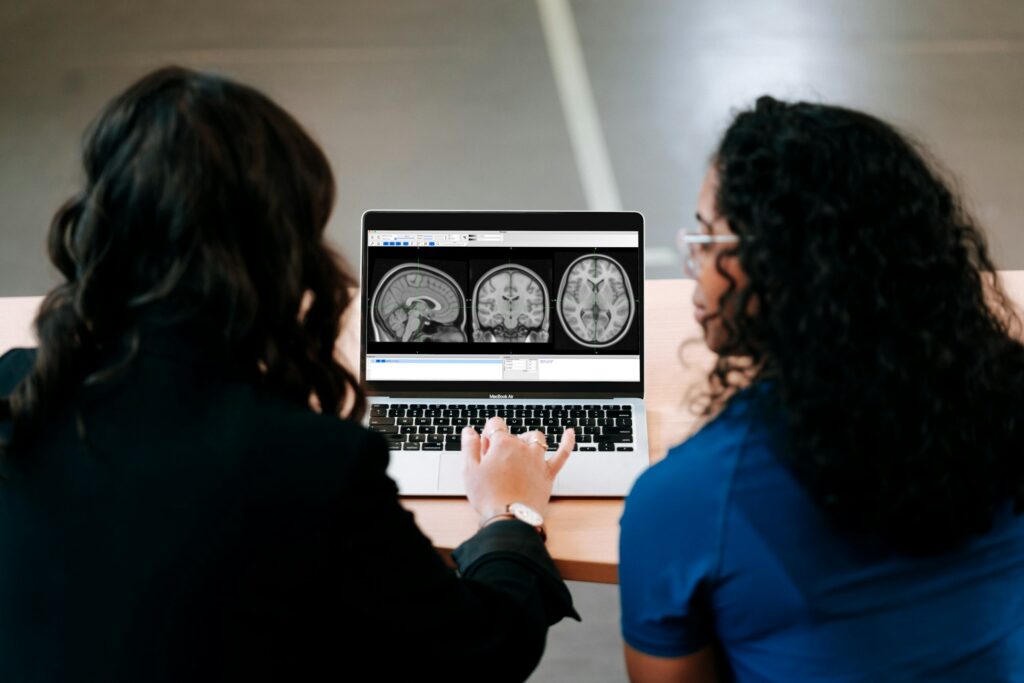
The same release said the centre employs more than 200 researchers, engineers and technicians and works with 20 collaborators from different countries. Beyond healthy brains across the lifespan, its teams are studying brains affected by rabies, dementia and Alzheimer’s disease. The October announcement extends that programme into a formally launched mission, although the mission’s own funding and partners have not been named. For its earlier atlases the centre relied on partner hospitals and medical colleges to source brains, a network the new mission will need to widen if it is to cover more than 100 human brains across ages and diseases.
The atlases so far: DHARANI and ANCHOR
The 100-brain mission builds on two atlases the centre has already published. DHARANI, released on 10 December 2024, is described by IIT Madras as the most detailed three-dimensional high-resolution image set of the human foetal brain released by any research organisation, built from 5,132 digitally captured sections and marking over 500 brain regions at cell resolution. The dataset is open source through the centre’s BrainPortal viewer, which the institute says makes it freely available to researchers worldwide, and it was accepted for publication as a special issue of the Journal of Comparative Neurology. The institute said the project cost less than one tenth of comparable Western efforts, a claim it did not break down.
The work was supported by the Office of the Principal Scientific Adviser to the Government of India, with processing help from the chip company NVIDIA and medical collaboration from Mediscan Systems and Saveetha Medical College Hospital, according to the release. ANCHOR, the brainstem atlas that followed on 12 June 2026, was released during the 3rd BRICS Neuroscience Symposium held at the campus from 5 to 7 June.
It overlays eight complementary immunostains across more than 500 serial sections to map over 200 brainstem nuclei and fibre tracts spanning prenatal, childhood and adult brains, and is publicly available at anchor.humanbrain.in. Brains for the work were sourced with help from CMC Vellore, Kilpauk Medical College, MediScan Systems and the Sri Ramachandra Institute of Higher Education and Research.
A donor-backed research centre
The centre was established in March 2022 with support from Sudha and Kris Gopalakrishnan, according to DT Next. It combines neuroscience, engineering, advanced imaging and computational science, and runs a whole-brain imaging platform for examining cellular structures across large volumes of brain tissue.
Its earlier releases include DHARANI, a 3D atlas of the human foetal brain built from digital images of 5,132 brain sections, published in 2024, and ANCHOR, a 3D atlas of the human brainstem mapping more than 200 nuclei and fibre tracts, published in June 2026, DT Next reported.
Neither the Prime Minister’s Office release nor the press reports read by TED give the cost of the centre, the budget for the new mission, the funders behind it or the institutions taking part in what the release calls a global mission. The release gave a single figure of over ₹13,000 crore for all the projects in the Prime Minister’s Chennai programme, without a breakdown by project. IIT Madras’s own press release page could not be accessed.
Music and technology centre
During the same visit the Prime Minister also inaugurated the IITM Maestro Ilaiyaraaja Centre for Music Learning and Research, according to Organiser. The weekly reported that the centre was built with the composer Ilaiyaraaja’s music company, following a foundation stone laid in 2024, and is intended to bring music learning and research together with technology. The Prime Minister’s Office release on the Chennai visit does not mention this centre, and no cost or programme details have been published.
What it means
TED analysis:
- Funding model: The brain centre is a donor-named research unit inside a public institute, and a prime ministerial dedication raises its standing with government and industry funders. Other IITs with large alumni and philanthropic gifts have a clear template for attaching national missions to named centres.
- Data as an asset: Cellular-resolution atlases such as DHARANI, ANCHOR and C-STROKE are research data resources that pharmaceutical, medical imaging and AI companies may want to use. Access and licensing terms for the new atlases have not been published, and they will decide how much commercial value the institute captures.
- Disclosure: With no budget, partner list or timetable for the 100-brain mission, funders and potential collaborators cannot yet judge its scale. The figures to watch are the mission’s funding sources and the number of partner institutions that sign up.