TED Newsdesk, New Delhi: The Health Ministry has released protocols for the reopening of schools. Ashwini Kumar Choubey, Union Minister of State for Health and Family Welfare, informed about the guidelines via his Twitter handle, on Sunday. Union Health Ministry released Standard Operating Procedures for different educational activities like Educational and Skill training centers. Besides, Higher Education Institutes have received the nod for practical based subjects and technical courses requiring laboratories.
MoHFW releases protocols: Health Ministry rules in detail
The document behind the announcement is a standard operating procedure for partial reopening of schools, issued by the ministry’s Directorate General of Health Services on 8 September and applying from 21 September. Visits are voluntary, limited to students of classes 9 to 12, and conditional on written consent from parents or guardians. Only schools outside containment zones may open, and students, teachers and employees who live inside one must stay away. The sequence is by now familiar: the MoHFW releases protocols, officials at the Health Ministry field the questions, and school managements absorb the cost of compliance.
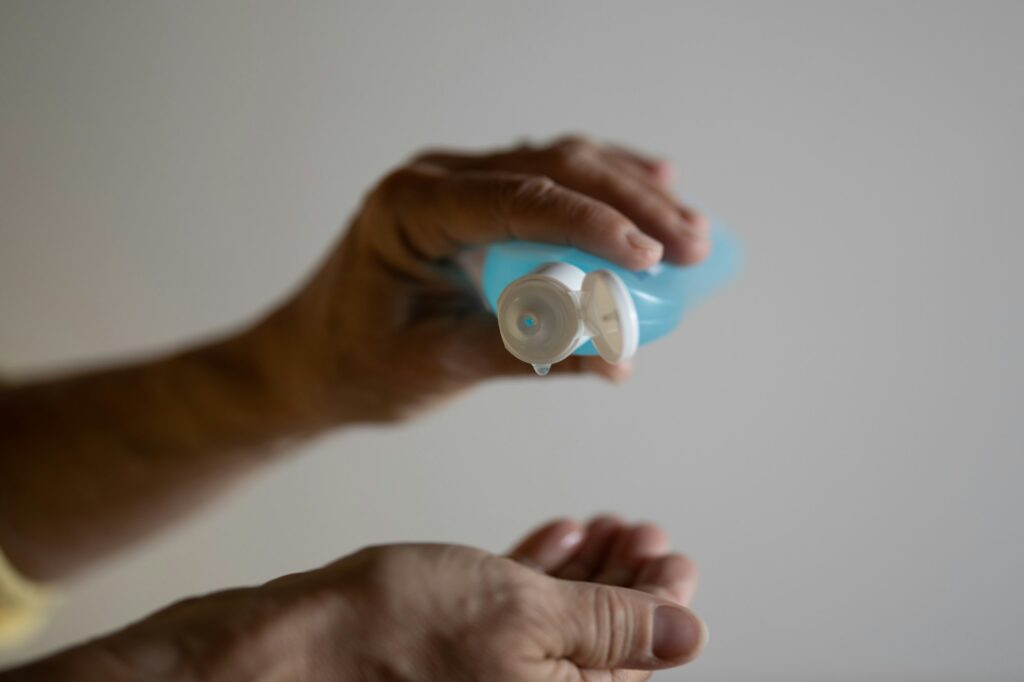
The detail is exacting. Work areas, laboratories included, must be sanitised with 1% sodium hypochlorite solution before reopening, and teaching materials and computers wiped down with 70% alcohol. Assemblies, sports and events that could crowd a campus are barred, as are cafeterias, messes and swimming pools. Nothing is to be shared, from notebooks and pens to water bottles, face covers are mandatory for everyone at all times, and guidance sessions may move outdoors when the weather allows. Students are kept out of cleaning work altogether, and any school-run transport must be sanitised and spaced.
“The staggering of classroom activities, with separate time slots, to allow adequate physical distancing and disinfection of classroom premises. Academic scheduling to have an intermix of regular classroom teaching and online assessment. Teaching faculty to ensure that they and students ear masks throughout teaching activities. Sharing of items like laptops, notebook, stationery amongst students is not to be allowed,” stated the guidelines.
The Government has allowed the partial opening of schools for classes 9th to 12th. Students will be able to visit their school, as per their will, to seek help from their teachers, from September 21. This further led the Health Ministry to issue a standard operating procedure (SOP) for a partial reopening of schools on September 8. As directed in the guidelines, the authorities have to ensure proper seating arrangement, maintaining a distance of six feet between benches.
The SOP sits within the phased reopening framework notified by the central government for September. The Physical presence of up to 50% of each teaching and non-teaching members, in the schools, were permitted by the Home Ministry. The students will have the option to attend online classes, consult via telephone, from September 21. They may be able to get assistance, from these staff, for all their education-related or other sorts of queries.
The second SOP: skill centres and research laboratories
A parallel document covers skill and entrepreneurship training institutions, among them the National Skill Training Institutes and Industrial Training Institutes, along with short-term centres registered with the National Skill Development Corporation or state skill missions. It extends to higher educational institutions running PhD programmes and technical or professional postgraduate courses that need laboratory work, which the Department of Higher Education permits in consultation with the Ministry of Home Affairs, a carve-out that matters most to research-heavy campuses such as the Indian Institute of Science, where laboratory access defines doctoral work.

When the MoHFW releases protocols, the drafting runs to the specific. Workstations must give each trainee about 4 square metres, equipment is to be disinfected before every use, thermal screening and hand hygiene are required at entry, and the Aarogya Setu app is advised. Hostels, where they open, must keep beds six feet apart, stagger mess timings and give priority to students who lack local support or online access, with arrivals from other states liable to produce a negative RT-PCR report where state protocols demand one.
As per the guidelines, cleaning and sanitization on a regular basis will be mandatory. Use of 1% sodium hypochlorite for disinfecting regularly touched areas and surfaces like handrails, washrooms, doorknobs, so on will be necessary for every classroom, parking areas, labs and common spaces. The process will have to be carried out both at the beginning of the classes and after the dismissal.

However, visiting schools physically is an option only for those living in containment free zones. Students outside containment zones may have the provision to visit their schools, for teachers’ help or assistance, personally, but with a written and signed consent of their guardians or parents. This is a necessity in such times of crisis.
With the increasing number of cases of COVID-19, on a daily basis, it will be quite challenging to reopen the schools and institutions. Risks of lives will increase especially in remote areas. However, during an uncertain time like this, one cannot ignore the consequences of the pandemic on the education of the country.
Since then: the decision passed to the states
The 21 September opening proved a prelude rather than the main event. On 30 September 2020 the Ministry of Home Affairs issued its next set of reopening guidelines, allowing states and union territories to decide on reopening schools after 15 October 2020, in a graded manner and in consultation with school managements, according to a Ministry of Education reply placed before Parliament.
The Department of School Education and Literacy followed with its own reopening SOP on 5 October 2020, a document later revised in December 2021. The cycle in which the MoHFW releases protocols and then revises them carried on past the school gates: on 1 March 2021 the ministry issued a fresh SOP for skill training and higher education institutions that superseded its 8 September 2020 guidelines, keeping the 4 square metre rule and adding ventilation norms and pulse oximeters to the checklist.